Finding the Best Retirement Account Without Breaking the Bank: Your Complete IRA and 401(k) Guide

Picking between an IRA and a 401(k) confuses millions of Americans every year. Most either overpay in fees or miss out on tax savings because the options feel overwhelming.
The best retirement account isn’t the most expensive one. It’s the one that fits your situation while keeping costs low. This guide helps you make that choice without wasting time or money.
Understanding Your Core Options: IRA vs 401(k)
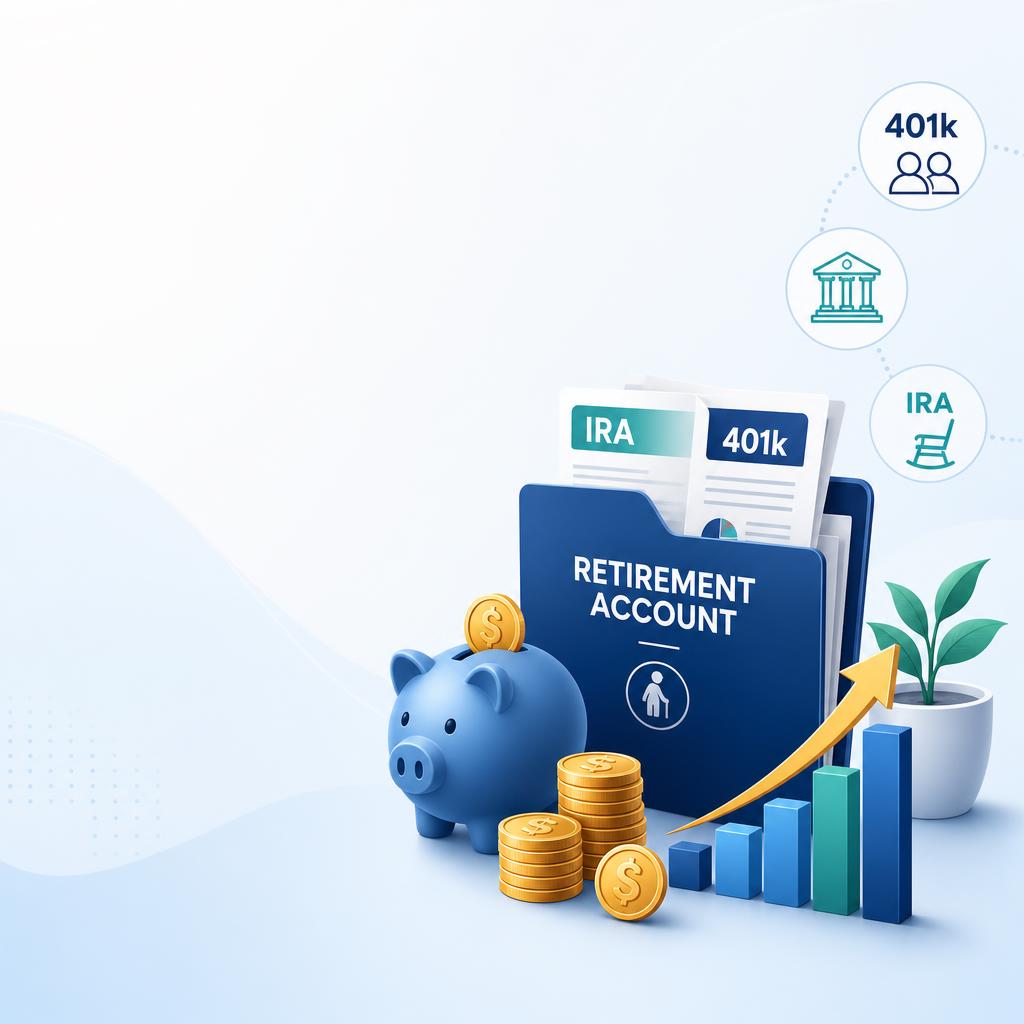
401(k) plans come through your employer. Contributions get pulled from your paycheck before taxes (traditional 401(k)) or after taxes (Roth 401(k)). Many employers match a percentage of what you put in.
IRAs you open yourself through a brokerage. Traditional IRAs let you deduct contributions now and pay taxes when you withdraw. Roth IRAs flip that: no deduction now, but withdrawals are tax-free later.
Most people should use both types eventually. Understanding what each one costs matters more than most realize.
The Hidden Costs Eating Your Retirement Savings
Fees can erode 20-30% of your retirement savings over 40 years. Most people never notice because the money disappears gradually.
Expense Ratios
Every mutual fund or ETF charges an annual fee called an expense ratio. A fund with a 1% expense ratio costs you $100 yearly for every $10,000 invested.
Compare these over 30 years with 7% returns:
- 0.05% expense ratio: $10,000 grows to $74,872
- 1% expense ratio: $10,000 grows to $57,435
That’s a $17,000 difference on a single $10,000 investment.
Administrative Fees
Many 401(k) plans charge $20-$100+ annually for recordkeeping and compliance. IRAs usually don’t have these institutional fees, though some custodians charge account maintenance fees.
Trading Commissions and Transaction Fees
Most major brokerages stopped charging stock trading commissions in 2019. Some retirement accounts still charge fees for mutual fund purchases, account transfers, or paper statements.

Finding the Cheapest 401(k) Options
If your employer offers a match, start there. A 50-100% instant return beats any fee concern.
Maximizing Your 401(k) Value
Get the full employer match. If your company matches 50% of contributions up to 6% of salary, contribute at least 6%. Not doing this is leaving free money behind.
Pick low-cost index funds. Most 401(k)s offer 15-30 options. Look for:
- Total market index funds (under 0.10%)
- S&P 500 index funds (0.02-0.05%)
- Target-date funds (under 0.20%)
Skip actively managed funds above 0.50% unless they have exceptional long-term performance.
Check your plan’s fees. Ask HR for the fee disclosure document. If administrative fees exceed $100 yearly or all the fund options carry high expense ratios, contribute enough to get the match, then put additional savings in an IRA.
When to Look Beyond Your 401(k)
Some small business 401(k) plans have excessive fees—over $150 yearly in admin charges plus limited fund choices all carrying 1%+ expense ratios. If that’s your situation:
- Contribute enough to get the match
- Open an IRA for additional savings
- Push for a better plan if you can influence the decision
The Most Cost-Effective IRA Providers
IRAs give you more flexibility and often lower costs than 401(k)s. No employer match, though.
Top Low-Cost IRA Brokerages
Fidelity, Vanguard, and Charles Schwab beat everyone else on cost:
- No account minimums or maintenance fees
- Zero-commission stock and ETF trades
- Index funds with expense ratios as low as 0.015%
- No-fee mutual funds from their own lineups
Vanguard invented low-cost index investing. Their Total Stock Market Index Fund (VTSAX) charges 0.04%.
Fidelity offers zero expense ratio index funds (FZROX, FZILX). Literally free to own. You can’t transfer them to other brokerages, though.
Charles Schwab matches Fidelity’s pricing and has better research tools and customer service.
Traditional IRA vs Roth IRA: Which Saves More?
The cost structure is identical. Tax treatment differs.
Traditional IRAs give you an upfront tax deduction. Contribute $6,500, reduce your taxable income by $6,500. Pay taxes when you withdraw in retirement.
Roth IRAs use after-tax money but grow tax-free. No deduction now, no taxes later—including on decades of gains.
Which one costs less depends on your tax situation:
- High tax bracket now, lower expected in retirement → traditional
- Early career with lower income → Roth often wins
- Unsure → split contributions
For 2024, limits are $7,000 for both ($8,000 if you’re 50+). Roth IRAs have income phase-out limits.
Building Your Cost-Optimized Retirement Strategy
Step 1: Secure Free Money
Contribute enough to your 401(k) to get the full employer match. Usually 3-6% of salary. Even with high fees, a 50-100% instant return justifies it.
Step 2: Max Out an IRA
After getting the match, fully fund an IRA ($7,000 for 2024). Use Fidelity, Vanguard, or Schwab. Invest in broad market index funds under 0.10%.
Step 3: Return to Your 401(k)
If you’re still below the 401(k) limit ($23,000 for 2024), increase contributions there. The higher limits let you shelter more money despite potentially higher fees.
Step 4: Consider a Backdoor Roth
High earners blocked from direct Roth contributions can use the backdoor: contribute to a traditional IRA (no income limits), then convert to a Roth. Requires careful tax planning but gives you Roth access at any income.
Investment Choices That Minimize Costs
Account selection is half the fight. What you invest in matters just as much.
The Power of Index Funds
Index funds track market benchmarks like the S&P 500 instead of trying to beat them. That means:
- Lower expense ratios (0.03-0.10% vs 0.75-1.50% for active funds)
- Lower turnover and better tax efficiency
- Consistent market-matching returns
Low-cost index funds outperform 80-90% of actively managed funds over 15+ years, mostly because fees eat active managers’ returns.
Three-Fund Portfolio: Maximum Simplicity, Minimum Cost
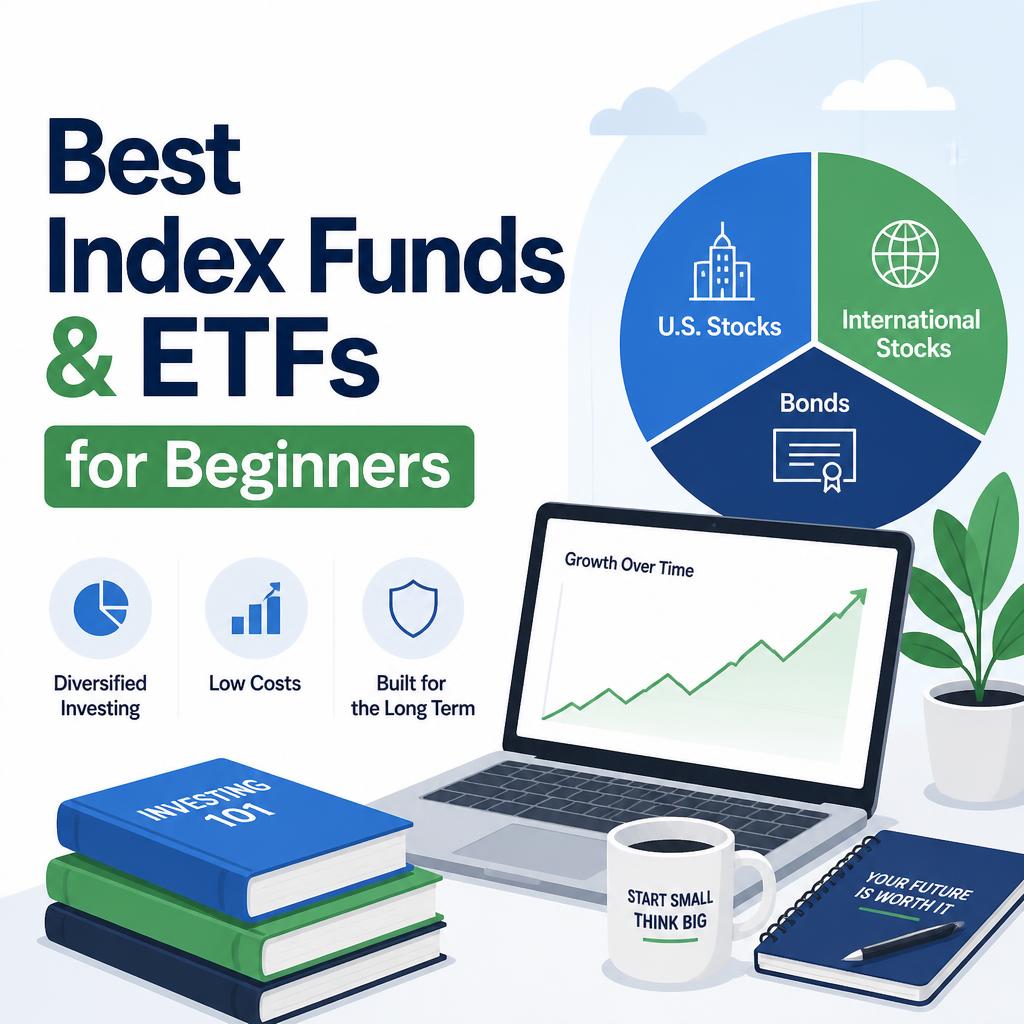
A three-fund portfolio covers what you need:
- Total US Stock Market Index (60-70%)
- Total International Stock Market Index (20-30%)
- Total Bond Market Index (10-20%, more as you approach retirement)
With expense ratios under 0.10% on each fund, total annual cost on a $100,000 portfolio runs under $100. Actively managed alternatives cost $750-1,500.
Target-Date Funds: Autopilot on a Budget
Target-date funds automatically shift from stocks to bonds as you approach retirement. Vanguard’s charge around 0.08%, Fidelity’s around 0.12%.
Slightly more expensive than building your own three-fund portfolio, but they eliminate rebalancing decisions. Often worth it for hands-off investors.
Advanced Strategies to Reduce Retirement Costs
HSA Triple Tax Advantage
Health Savings Accounts aren’t retirement accounts, but they work like one. With a high-deductible health plan, you can contribute $4,150 (individual) or $8,300 (family) in 2024.
HSAs offer:
- Tax-deductible contributions
- Tax-free growth
- Tax-free withdrawals for medical expenses
After 65, you can withdraw for any reason (paying ordinary income tax like a traditional IRA). Before 65, medical expenses come out tax-free. Healthcare is most Americans’ largest retirement expense.
Mega Backdoor Roth
If your 401(k) allows after-tax contributions beyond the standard $23,000 limit and in-service withdrawals or conversions, you can funnel an additional $46,000 yearly into Roth accounts.
Requires specific plan features but worth investigating if you’re maxing standard limits.
Fee Negotiation for Small Business Owners
Self-employed and small business owners can set up Solo 401(k)s or SEP IRAs with Vanguard or Fidelity, avoiding the high fees from insurance companies or full-service brokerages.
Common Mistakes That Cost Thousands
Leaving Old 401(k)s Behind
Changing jobs without rolling over your old 401(k) into an IRA or your new employer’s plan means paying unnecessary administrative fees. Old accounts become harder to manage and easier to forget.
Solution: Roll old 401(k)s into an IRA at Fidelity, Vanguard, or Schwab within 60 days of leaving.
Paying for Financial Advice You Don’t Need
Many advisors charge 1% of assets annually. On a $500,000 portfolio, that’s $5,000 yearly—$150,000 over 30 years with compounding.
Solution: For straightforward situations (regular contributions, diversified index funds, long time horizon), manage your own accounts. For complex ones (business ownership, significant real estate, estate planning), use fee-only advisors who charge flat rates instead of percentages.
Overlooking Roth Conversions in Low-Income Years
If you have a year with unusually low income (job transition, sabbatical, early retirement), converting traditional IRA money to Roth while in a low tax bracket can save thousands.
Timing Mistakes with Required Minimum Distributions
At 73, you must start taking Required Minimum Distributions from traditional 401(k)s and IRAs. Missing them triggers a 25% penalty on what you should have withdrawn.
Solution: Set calendar reminders or work with your brokerage to automate RMDs at 73.
Making Your Decision: A Practical Framework
Four questions:
1. Does your employer match 401(k) contributions?
- Yes → contribute enough to get the match
- No → skip to question 2
2. What are your 401(k) fees?
- Under $150 yearly with expense ratios under 0.20% → good for full contributions
- Over $150 or limited low-cost options → prioritize IRA after getting any match
3. Current tax bracket vs expected retirement bracket?
- Higher now → traditional accounts
- Lower now or uncertain → Roth accounts
- Really unsure → split contributions
4. Maxing out limits?
- Not yet → max IRA ($7,000), then return to 401(k)
- Already maxing both → explore HSA, taxable brokerage with tax-efficient funds, or mega backdoor Roth
Your Action Plan
Monday: Log into your 401(k) and any IRA. Document contribution rates, investments, and fees.
Tuesday: Confirm you’re contributing enough to get the full match. Adjust if needed.
Wednesday: If you don’t have an IRA, pick Fidelity, Vanguard, or Schwab. Complete the application (15 minutes).
Thursday: Find the lowest-cost index or target-date funds in your accounts.
Friday: Automate monthly IRA contributions or adjust 401(k) payroll deductions.
The Bottom Line
Finding the best retirement (IRA/401k) isn’t about secret strategies. It’s about:
- Getting all available employer matching
- Keeping fees below 0.20%
- Choosing traditional vs Roth based on your tax situation
- Automating contributions
A 30-year-old earning $60,000 who contributes 15% with 0.05% expense ratios will have roughly $1.2 million by 65 (assuming 7% returns). Same person paying 1% in fees ends up with $950,000. That’s $250,000 lost to fees.
Start with your employer’s match, max a low-cost IRA, then return to your 401(k) for additional contributions. Pick broad market index funds, automate everything, let compound interest work.
Your future self will appreciate these decisions.